
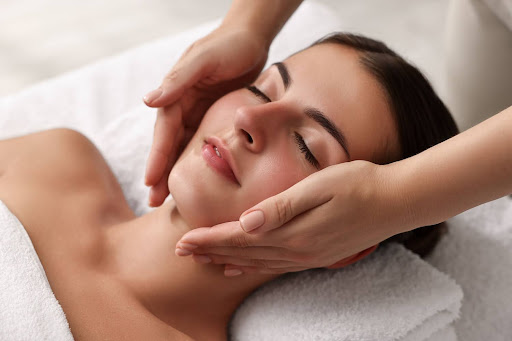
Facials are non-invasive professional skincare treatments that improve the condition and appearance of your skin. Two of the most popular facials are the Hydrafacial and the traditional facial.
Both treatments cleanse, exfoliate, and hydrate, but they have several notable differences.
A traditional facial involves hands-on techniques, such as cleansing, exfoliating with scrubs, applying serums or masks, and manual extractions. A Hydrafacial is a more advanced facial treatment that utilizes patented vortex technology to deep cleanse, custom exfoliate, gently extract, and infuse hydrating serums and customized boosters deep into the skin.
With similar goals and overlapping benefits, many people are unsure whether to stick with a traditional facial or if it’s worth it to upgrade to a Hydrafacial.
In this guide, our skin experts will walk you through the similarities and differences between a traditional facial and a Hydrafacial, what to expect during each treatment, the benefits of both, and how to determine which option is best for your skin goals.
What Is a Traditional Facial?
A traditional facial is a customizable, multi-step skincare treatment performed by an esthetician, designed to cleanse, exfoliate, and nourish the skin.
Unlike modern, advanced facials that use suction or specialized devices, a traditional facial relies on manual, hands-on techniques, using basic instruments or gentle massage.
Traditional facials typically last 60 to 90 minutes and involve a simple 4–5 step process:
- Through cleansing and skin evaluation: Traditional facials begin with a thorough cleansing to remove makeup, oil, and impurities, followed by a skin analysis where your esthetician evaluates your skin to choose the right products and techniques.
- Exfoliation: The second step of a traditional facial is removing dead skin cells by hand with scrubs or mild chemical solutions.
- Steam and extractions: If necessary, the next step of a traditional facial is manually clearing out clogged pores. Typically, steam is used first to soften the skin, then your esthetician will use their wrapped fingers or specialized tools to physically remove any congestion, such as blackheads and whiteheads.
- Mask application: Masks with targeted ingredients are applied next to address your skin type and concerns, such as hydrating masks for dryness, clay masks for oil control, or brightening masks for dullness.
- Serums, hydration, and sunscreen: Targeted serums and moisturizers are applied to lock in hydration, a balm is used to nourish the lips, and the treatment is finished with sunscreen to shield the skin from UV damage.
Traditional facials can be customized to address common skin concerns, including dryness, oily skin, and mild acne, but might not target more specific problems, such as fine lines and hyperpigmentation. Because they are customizable, traditional facials are suitable for most skin types. However, those with extremely sensitive skin might not tolerate the scrubs or extractions.
Due to their relaxing nature, traditional facials are often regarded as more of a “spa day” experience rather than a results-driven treatment. That’s not to say you won’t notice a difference in your skin. Once any redness resolves, your complexion will be brighter and healthier-looking for a few days. The results just aren’t as dramatic or long-lasting compared to advanced facials .
Benefits of Traditional Facials
A traditional facial is one of the most familiar professional skincare treatments and is widely available. While results are more subtle than those of more modern facials, they still provide meaningful benefits, especially when performed on a monthly basis.
Benefits of a traditional facial include:
- Deep cleansing: Removes oil, dirt, and buildup that daily washing can leave behind.
- Gentle exfoliation: Manual or chemical exfoliants help slough away dead skin cells to reveal a fresher layer of skin.
- Pore clearing: Steam and extractions can reduce blackheads and congestion, making the skin feel smoother.
- Hydration and nourishment: Masks and serums are selected for your skin type to restore moisture and balance.
- Customizable: The serums and masks used in traditional facials can be customized to match your skin type and target basic skin concerns such as dryness, oiliness, congestion, or mild acne.
- Relaxing: Most traditional facials incorporate massage, which can enhance blood flow and promote a sense of stress relief.
- Budget-Friendly: Since they rely on manual techniques rather than specialized equipment, a traditional facial is generally the least expensive facial. That said, it typically takes a series of consistent treatments to achieve substantial results.
Traditional facials are great for basic skin maintenance or used between more advanced facials or laser skin treatments. They can help manage dryness, mild acne, or dullness, while also providing a relaxing, spa-like experience that many people prefer.
When to Choose a Traditional Facial
There are a few situations where a traditional facial may be the best choice for you.
For example, if you’re looking for a true spa-like experience, traditional facials often provide a more indulgent and pampering atmosphere. The longer treatment time and extended massage during a traditional facial can be extremely stress-relieving. For some people, this relaxation aspect is just as important as the skincare benefits.
Budget considerations may also influence your decision. Traditional facials are often the least expensive facial service on a spa’s menu.
Bottom Line: Think of a traditional facial as a gentle reset for your complexion that can be customized using products based on your skin type. They are great for upkeep and an excellent way to give your daily skincare routine a monthly boost, but they aren’t the best for addressing more specific skin issues, such as significant dehydration, fine lines, hyperpigmentation, or severely congested pores.
What Is a Hydrafacial?
A Hydrafacial is a medical-grade facial treatment performed by an esthetician that uses patented Vortex-Fusion technology to cleanse, hydrate, exfoliate, and gently extract impurities without irritation, delivering an instant glow that many find unmatched compared to other facial treatments.
Unlike traditional facials that rely on manual techniques performed separately, the patented Hydrafacial device simultaneously cleanses, extracts, and hydrates your skin.
- Cleanse + Exfoliate: The skin is deeply cleansed and exfoliated with custom peels and a customizable dermabrasion tip that gently removes dead skin cells and loosens debris.
- Extract: Next comes the extraction phase, which is where the Hydrafacial really shines. The device uses painless suction to remove impurities from your pores without pain or irritation.
- Boost + Hydrate: To wrap up your treatment, the skin is infused with fully customizable boosters that target your skin’s specific needs and hydrating serums that will leave you glowing. These powerful ingredients are delivered deep into the skin using Vortex-Fusion technology, ensuring maximum absorption and effectiveness.
Some Hydrafacial providers can also perform lymphatic drainage and LED light therapy with the machine for additional skin clarity and a more lifted skin appearance.
Due to its gentle yet effective technology, the Hydrafacial is safe for nearly all skin types, including sensitive skin that may not tolerate other forms of exfoliation. Additionally, the Hydrafacial goes beyond addressing basic skin concerns like dry skin and oiliness.
Thanks to customizable booster serums that swirl into skin for improved efficacy, the Hydrafacial can target more complex skin issues such as fine lines, hyperpigmentation, severely clogged pores, acne, dullness, and dehydration.
Possibly the biggest perk of the Hydrfacial is instant gratification. You don’t have to wait for your glow. Results from a Hydrafacial are immediate. You’ll walk out with brighter, smoother, hydrated, dewy, “glass” skin that lasts for up to a week or longer.
In fact, after just one treatment, 100% of study participants reported a decrease in pore size, 90% saw improvements in fine lines, 80% experienced enhanced texture, and 70% noted an increase in hydration.
Benefits of a Hydrafacial
The Hydrafacial has quickly become a facial favorite, ranking as the second most popular facial treatment in the U.S., with nearly 100% of users giving it a “worth it” rating.
The unique technology and approach of a Hydrafacial treatment offer several advantages that set it apart from other facial options.
- Immediate, visible results: Unlike treatments that may take days or weeks to show changes or facials that leave behind redness, a Hydrafacial delivers results you can see and feel right away. Your complexion will look brighter, feel smoother, and have a radiant glow immediately after your session, and even more improvement with continued treatments.
- Intense hydration: The patented Vortex-Fusion system infuses hydrating serums deeper into the skin than topical application alone. This creates plumper, more hydrated skin that holds onto its glow for up to a week or more after treatment.
- Gentle (yet effective) exfoliation: Dead skin cells are gently removed without the irritation or redness that sometimes accompanies manual scrubs or chemical peels. This makes Hydrafacials safe for all skin types, even sensitive skin.
- Painless extractions: The gentle suction-based system thoroughly clears even the most clogged pores comfortably, without pinching, squeezing, or risk of scarring.
- Customizable: Hydrafacials can be tailored with booster serums to target specific concerns, such as fine lines, pigmentation, acne, or dehydration. The machine can also perform lymphatic drainage and LED light therapy. Due to their gentle nature, Hydrafacials can also be paired with other facial treatments, such as PRP microneeding.
- No redness or downtime: Because the exfoliation and extraction process is gentle, there’s no redness or irritation after a Hydrafacial. Many people even pop in for a Hydrafacial on their lunch break or the day of a big event.
- Safe for all skin types: Whether your skin is oily, dry, sensitive, or combination, a Hydrafacial can be adjusted to meet your needs safely and effectively.
Hydrafacials are essentially an upgraded and much more high-tech version of a traditional facial. They are perfect for an instant skin boost that stays around longer than a day or two, or if you have skin concerns that go beyond the basics, such as fine lines, hyperpigmentation, or severely clogged pores.
When to Choose a Hydrafacial
If you’re looking for more than just relaxation and want more dramatic results you can see immediately, a Hydrafacial is the better choice. It’s ideal for anyone who wants to walk out of their appointment with smoother, brighter, deeply hydrated skin and a glow that can last for up to a week or more.
A Hydrafacial is also the smarter option if you have specific skin concerns you’d like to address, such as fine lines, hyperpigmentation, uneven tone, congested pores, or chronic dryness. Thanks to its customizable tips and boosters, the treatment can be tailored to your unique needs rather than offering a one-size-fits-all approach.
A Hydrafacial is also perfect for those with a busy lifestyle who don’t have time for redness, peeling, or recovery. The gentle, non-irritating process allows you to return to work or attend a special event immediately after your session.
And because it’s designed to be safe for nearly all skin types, including sensitive skin, a Hydrafacial is a versatile option whether you’re preparing for a special occasion, maintaining your skin health, or tackling ongoing concerns with regular treatments.
Bottom Line: A Hydrafacial is more than a minor skin refresh; it’s an advanced, yet gentle, results-driven treatment that combines cleansing, exfoliation, hydration, and customized boosters to target pretty much any skin concern in one seamless process. Clinically proven to reveal glowing skin, the Hydrafacial is ideal if you want instant radiance with no downtime and need more than a gentle boost from a traditional facial.
Key Differences Between Hydrafacial and Traditional Facials
Both the Hydrafacial and traditional facial share the same goal of improving your skin’s health and appearance, and can be customized for most skin types. However, they differ in their approach, level of customization, and both short and long-term results.
Several factors differentiate a normal facial from a Hydrafacial, including:
Technology and Method
Every step of a traditional facial, from cleansing and exfoliation to extractions and product application, is performed by hand using massage or basic tools, such as brushes, steamers, and manual extraction instruments.
Manual techniques are effective for general skin maintenance, but results can vary or be inconsistent depending on the skill of your esthetician and the products used. Additionally, if manual extractions are necessary, they can leave your skin irritated for a few hours to a few days, which can delay desired results.
The Hydrafacial takes a different approach. Using a handheld device powered by patented Vortex-Fusion technology, it exfoliates and hydrates more consistently and precisely than manual application. The device also performs extractions using gentle suction, which is more comfortable than manual methods and typically doesn’t leave behind any irritation.
What makes the Hydrafacial especially unique is its ability to perform multiple steps at once. With a traditional facial, each step is performed individually. The Hydrafacial device simultaneously exfoliates, clears impurities, and infuses the skin with custom booster serums. This not only reduces variability and minimizes discomfort but it also slightly shortens treatment time, which is a perk for those with busy schedules.
Treatment Experience and Comfort
Traditional facial treatments are often described as extremely relaxing because they typically include steam, slow product application, and a face and neck massage.
However, manual extractions can sometimes be a bit uncomfortable, especially if you have sensitive skin or stubborn blackheads. Some clients also experience redness or irritation that can last for a few hours or even days after treatment.
A Hydrafacial is also relaxing and comfortable, but in a different way. Most clients describe the sensation as feeling like a “cool paintbrush” moving across their face.
The suction used for extractions is painless, and there’s no aggressive manual squeezing. Because the process is gentle and precise, it typically does not leave irritation or red marks, allowing you to return to normal activities or even attend a special event immediately.
Skin Types and Skin Concerns Addressed
A traditional facial is suitable for most skin types, but it’s often recommended for normal, dry, or combination skin. It can also benefit oily or acne-prone skin when extractions and clarifying masks are included. However, because the process can involve steam, scrubs, and manual extractions, it may irritate very sensitive or highly reactive skin.
Traditional facials are best for general skin maintenance and basic concerns such as dryness, mild acne, oiliness, or a dull complexion. However, they may not be as effective for more specific or complex skin issues, such as fine lines, hyperpigmentation, or severely congested pores.
The Hydrafacial is gentle, non-irritating, and doesn’t rely on harsh scrubs or aggressive extraction techniques, making it an excellent facial for all skin types, including sensitive skin that may not tolerate harsher treatments or manual extractions commonly used in traditional facials.
While the Hydrafacial can address common skin concerns like dryness and oily skin, the wide range of customizable boosters and technology-driven delivery system make it effective for even more specific concerns, including fine lines, uneven skin tone, brown spots, enlarged and clogged pores, acne, and dehydration.
To learn more, read “Is a Hydrafacial Right for Your Skin Type”.
Customization Options
A traditional facial can be tailored to your skin type and current concerns, but the level of customization depends on the skill and knowledge of your esthetician, as well as the products they have available.
A Hydrafacial offers more advanced customization and delivery of a wide range of booster serums. Whether you’re dealing with fine lines, hyperpigmentation, acne, uneven tone, or dehydration, there’s a booster that can be infused into your skin to address your needs.
Many providers also offer add-ons that the Hydrafacial device can perform, such as LED light therapy or lymphatic drainage to enhance results. Due to the gentle nature of the Hydrafacial, more services can be stacked, such as PRP microneedling, exosomes, peptides, or stem cells.
Results
A traditional facial can leave your skin feeling instantly refreshed and looking brighter for a few days. However, if extractions are necessary, you may experience temporary redness that lasts a few hours, possibly a day or two if you have sensitive skin.
Additionally, results from a single traditional facial are typically subtle. To see significant changes in texture, tone, or clarity, you’ll need to return for consistent sessions. Ideal frequency depends on your skin type, age, and specific skin goals. Typically, if you want results that build and last, monthly traditional facials are needed.
A Hydrafacial delivers immediate and more dramatic results. Your skin will feel intensely hydrated, look smoother, brighter, and have a noticeable “glass skin” glow as soon as the treatment is complete. And because the Hydrafacial is gentle and non-irritating, there’s no redness or downtime. You can even attend an event the same day as your Hydrafacial.
Additionally, because the Hydrafacial utilizes a technology-driven infusion that allows active ingredients to penetrate more effectively, results last much longer compared to a traditional facial. Typically, the deep hydration and dramatic glow continue for 5 to 7 days, sometimes more, depending on your skin type and lifestyle.
Results compound with each session, and because treatments are customizable, your plan can evolve as your skin’s needs change. To maintain consistent improvements, most providers recommend scheduling Hydrafacial treatments every 4 to 6 weeks.
Is a Hydrafacial Better than a Regular Facial?
Better is subjective when it comes to determining whether a Hydrafacial or a traditional facial is the best facial. Both treatments can improve your skin, but they work in very different ways and offer slightly different results.
A Hydrafacial is often viewed as a significant upgrade from a traditional facial, as it utilizes advanced technology for deeper hydration and more dramatic, instant results.
However, for those who only want a slight skin boost, don’t mind the possibility of some redness, and seek a longer facial with a spa-like, hands-on experience, a traditional facial may be the best option.
To help you determine which facial is best for you, here is a side-by-side comparison.
At a Glance: Comparison of Hydrafacial and Traditional Facial
| Feature | Traditional Facial | Hydrafacial |
| Technology | Manual techniques; results vary by esthetician | Patented Vortex-Fusion device for consistent delivery |
| Treatment Steps | Cleansing, exfoliation, extractions, mask, massage, hydration | Multi-step process: cleanse, exfoliate, extract, hydrate, fuse with custom boosters |
| Customization | Limited to esthetician product availability and skill | Adjustable exfoliation, advanced boosters, and add-ons (LED light therapy, lymphatic drainage) |
| Comfort | Relaxing, but extractions can be uncomfortable; possible redness | Gentle and painless; often described as a “cool paintbrush” with no irritation |
| Results | Subtle glow, hydration, and clarity that lasts a couple of days | Immediate brightness, smoother texture, and a dewy glow after one treatment that lasts 5+ days |
| Downtime | Possible redness or irritation for hours to days | No downtime; safe for same-day events |
| Skin Types | Normal, dry, combination, oily; may irritate very sensitive skin | Safe for nearly all skin types, including sensitive or rosacea-prone skin |
| Skin Concerns | General maintenance, dryness, mild acne, oiliness, dullness | Fine lines, hyperpigmentation, uneven skin tone, enlarged pores, acne, dullness, dehydration |
| Treatment Time | 60–90 minutes | 30–45 minutes |
| Longevity of Results | Temporary hydration and glow; long-term benefits require ongoing sessions | Glow and hydration last at least 5–7 days; consistent improvements with regular treatments |
What to Expect During a Hydravacial Treatment vs a Traditional Facial
It might seem like the experience of getting a facial would be the same no matter which type you choose, but the process looks a little bit different depending on whether you’re getting a Hydrafacial or a traditional facial.
Consultation and Preparation
- Traditional Facial: Your esthetician will ask you about your skin concerns and goals, then examine your skin under a magnifying lamp to get a closer look and determine if extractions are needed and which products will best suit your skin type.
- Hydrafacial: Like a traditional facial, your session begins with a review of your skin concerns and goals, followed by a closer examination of your skin to determine which boosters will yield the best outcome.
Cleansing and Exfoliation
- Traditional Facial: Cleansing is done manually, often followed by a physical scrub or light chemical exfoliant to remove dead skin cells.
- Hydrafacial: Uses patented Vortex-Fusion technology and customizable tips that simultaneously deep clean and gently exfoliate, making the process more consistent and less irritating.
Extractions
- Traditional Facial: Manual pressure is used to extract blackheads and unclog pores. This can be effective but may cause redness or discomfort. Steam is often utilized before the extraction process to soften the skin and open pores, making impurities easier to remove.
- Hydrafacial: Pores are cleared using a gentle suction tip that removes debris without squeezing, making the process more comfortable and less likely to leave marks.
Hydration and Nourishment
- Traditional Facial: A mask, serum, or moisturizer is applied by hand and left to absorb into the skin’s surface. Often, this is when you get a relaxing massage.
- Hydrafacial: Infuses the skin with hydrating serums directly through the device, allowing deeper absorption for longer-lasting hydration.
Customization
- Traditional Facial: Product choice (mask, serum, moisturizer) can be adjusted for dryness, oiliness, or acne. Anti-aging focused products can also be used, but they generally sit closer to the skin’s surface and don’t penetrate deeply enough to deliver significant anti-aging results. Consistent treatments over time are needed to see gradual improvements.
- Hydrafacial: Highly customizable with targeted boosters that are infused deep into the skin. While not proprietary to Hydrafacial (meaning they can be used in other professional skincare treatments), many Hydrafacial boosters are co-created with Hydrafacial and partner brands, and are specifically designed to work synergistically with the device’s delivery system.
Add-ons like lymphatic drainage and LED light therapy can also be included. A Hydrafacial can also be combined with other treatments, such as microneedling with PRP, to address multiple skin concerns in a single session.
Comfort and Downtime
- Traditional Facial: Relaxing overall, but manual extractions or more vigorous exfoliation may leave skin red or sensitive for a few hours to days.
- Hydrafacial: Comfortable throughout, with no irritation or downtime, making it easy to return to work or social activities immediately after.
Treatment Duration
- Traditional Facial: Typically lasts 60 to 90 minutes, depending on the number of steps included.
- Hydrafacial: More efficient, usually completed in about 30 to 45 minutes.
How Often Should I Get Facials?
The frequency of your facial treatments depends on your skin type, concerns, and the type of facial you choose.
For Hydrafacials, you’ll see instant results after your very first facial. But Hydrafacials build upon the last. So, for optimal results, most skincare professionals recommend treatments every 4 to 6 weeks. This timing aligns with your skin’s natural renewal cycle, helping to maintain and build upon the improvements achieved with each treatment.
However, if you’re addressing specific concerns, such as acne or hyperpigmentation, you may benefit from more frequent Hydrafacial treatments initially, followed by 4-6 maintenance sessions.
For traditional facials, a frequency of 4-6 weeks is also suggested if your goal is basic maintenance. However, monthly facials are likely to yield the best results. Additionally, people with sensitive skin might need longer intervals between treatments, while those with oily or acne-prone skin might benefit from more frequent bi-weekly treatments.
It’s worth noting that you don’t have to choose between a traditional facial and a Hydrafacial. You can rotate both types of treatments in your skincare routine. Many people book traditional facials for basic maintenance or when they need some relaxation during stressful seasons. Then, incorporate Hydrafacials for more targeted concerns and special occasions.
Making the Right Choice for Your Skin
Choosing between a Hydrafacial and a traditional facial ultimately comes down to your specific skin goals, lifestyle, and preferences.
Consider a Hydrafacial if you want immediate, dramatic results with no downtime. It’s ideal if you have a busy schedule, are preparing for a special event, or want to address multiple skin concerns in a single treatment. The advanced technology and customization options make it particularly effective for specific issues like fine lines, hyperpigmentation, or severely congested pores.
A traditional facial may be a better option if you’re seeking a relaxing, therapeutic experience and have the time to enjoy a longer treatment. It’s also a good choice if you’re working with a skilled esthetician who specializes in your particular skin concerns or if budget is a primary consideration.
Many people find that the best approach is to incorporate both types of treatments into their skincare routine, using Hydrafacials for targeted results and traditional facials for relaxation and general maintenance.
Whatever facial you choose, the most important thing to consider when searching for the best facial near you or looking for someone qualified to perform a Hydrafacial safely is to choose a reputable, experienced provider at a trusted medical spa or aesthetic center who can properly assess your skin and recommend the best treatment for your individual needs.
Final Thoughts
When it comes to achieving a youthful, healthy, glowing complexion, it takes more than a good skincare regimen. A personalized medical-grade AM/PM skincare routine tailored to your skin type and concerns is your foundation. However, if you want that glowing, glass skin everyone is after these days, you’ll need to incorporate regular professional skincare treatments, such as the Hydrafacial.
A Hydrafacial is worth the slightly higher price tag of a regular facial. Outside of laser skin resurfacing, which is more invasive and requires downtime, regular Hydrafacials are one of the best ways to support your skin’s long-term health and give your complexion an instant beauty boost that can last from your workweek all the way through the weekend.
At Relive Health, our experienced medical aesthetic team can analyze your skin and help you determine which facial treatment will best serve your skin type and concerns, or if another treatment, such as microneedling with PRP or laser skin resurfacing, is a more suitable treatment for your current skin needs.
Check out our center locator to find a Relive Health near you, schedule a consultation, and take the first step toward your healthiest, most radiant skin yet.