If your skin is dull, has an uneven texture, or you feel like your makeup just never really sits smoothly, dead skin cells and vellus hair, also known as peach fuzz, are likely to blame.
Face scrubs and brushes can loosen and remove dead skin cells, but the depth of exfoliation is surface-level. They also can’t remove the fine hairs on your face that create texture and trap oil and dirt. If you want a smoother, brighter, hair-free face that glows bare-skinned and looks airbrushed when you wear makeup, the solution is a professional dermaplane treatment.
Dermaplaning is a non-invasive, gentle treatment that provides deeper, more precise surface-level exfoliation, removing both dead skin cells and peach fuzz, for instantly smoother, brighter skin after just one session, without any harsh chemicals or downtime.
In this article, our medical aesthetic experts at Relive Health will walk you through everything you need to know about dermaplaning and provide answers to the most commonly asked questions about dermaplaning.
In This Article:
- What Is Dermaplaning?
- The Benefits of Gentle Exfoliation Through Dermaplaning
- How is Dermaplaning Different from Shaving?
- Is Dermaplaning The Same As Dermabrasion or Microdermabrasion?
- Who Is An Ideal Candidate for Dermaplaning?
- Who Should Not Get a Dermaplane Facial?
- What to Expect During Your Dermaplaning Treatment
- Dermablane Treatment Frequently Asked Questions
What Is Dermaplaning?
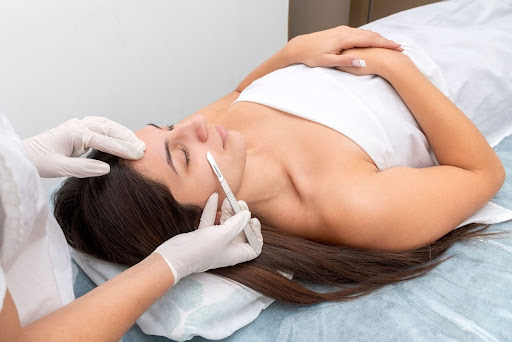
Dermaplaning is a facial skin resurfacing technique that uses a surgical-grade scalpel to manually scrape away dead skin cells, fine hairs, and other debris from the top layer of the face.
When dead skin cells accumulate on the skin’s surface, they can make the skin look dull, rough, and uneven. Dermaplaning manually removes these cells and encourages faster cell turnover, resulting in brighter, more even skin.
Additionally, dermaplaning effectively removes vellus hair, known as peach fuzz. These tiny hairs trap oil and dirt on the skin’s surface, which can clog pores, contribute to breakouts, and create a soft shadow that makes the complexion look less smooth.
By removing this hair, the skin is left clearer and more reflective, not only giving you smooth and polished skin but also allowing for better absorption of skincare products and a more flawless application of makeup.
Dermaplaning sounds intense, but it is not. A dermaplane treatment is non-invasive, quick, painless, requires no downtime, and delivers instant results. You walk away with rejuvenated, smoother, more radiant baby-soft skin. With consistent treatments, dermaplaning facials may even reduce the appearance of superficial acne scars and other skin imperfections, such as pitted skin.
Home Dermaplaning vs Professional Dermaplaning
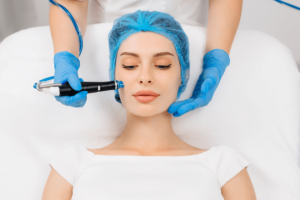
While simple, dermaplaning uses a very specific technique. Therefore, a dermaplane treatment should only be performed by a licensed aesthetician, dermatologist, plastic surgeon, or other qualified skincare professional.
There are face razors you can purchase to dermaplane at home, but most are not as high-quality as the sterile scalpel-type blade used in a professional dermaplane treatment and will not produce anywhere near the same results.
Even if you purchased a professional dermatome, it is not a good idea to attempt to use one to dermaplane your own face. Dermaplaning blades are sharp and must be held at a precise 45-degree angle while the skin is stretched taut so the blade can move in controlled, light strokes without catching or dragging.
Improper technique can lead to cuts, irritation, uneven exfoliation, a higher risk of spreading bacteria, and infection. If you want the smooth, glowing skin that dermaplaning provides, a professional dermaplaning treatment is always recommended.
The Benefits of Gentle Exfoliation Through Dermaplaning
A dermaplaning facial is a popular cosmetic skin treatment because the gentle exfoliation method removes both dead skin and peach fuzz, delivering multiple skin improvements that you can see and feel immediately.
Benefits of dermaplaning include:
Instantly Smoother, Brighter Skin
By removing the buildup of dead skin cells and peachfuzz that can make the complexion look dull and feel rough, dermaplaning instantly reveals the fresh, healthy skin underneath. This process creates a smooth, bright complexion and a radiant glow that is noticeable right after your appointment.
Enhanced Skincare Product Absorption
One of the most significant benefits of dermaplaning is improved product absorption. With the barrier of dead skin cells and peach fuzz gone, your expensive serums, moisturizers, and treatments can penetrate the skin more effectively. This allows the active ingredients in your skincare products to work more efficiently, maximizing their benefits and giving you more value from your routine.
Flawless Makeup Application
If you have ever been frustrated by foundation and concealer that looks cakey or settles into lines, no matter how good you are at applying makeup or how much skin prep you do, dermaplaning fixes the root of the problem by creating a smooth canvas.
Removing both dead skin and peach fuzz creates a perfectly smooth surface, allowing makeup to glide on evenly and sit naturally without texture or patchiness. The result is a more natural, airbrushed finish that lasts longer throughout the day.
Improved Skin Texture and Tone
With consistent dermaplaning treatments, many people notice a significant improvement in their overall skin texture and tone. That’s because dermaplaning promotes the turnover of new, healthy skin cells.
Over time, this process can help minimize the appearance of large pores, reduce superficial hyperpigmentation, gradually fade dark spots and rough patches, and soften the look of acne scars, leading to a more even and youthful complexion.
Safe, Gentle, and Non-Invasive
Unlike more aggressive treatments such as deep chemical peels or laser skin resurfacing, dermaplaning is a gentle exfoliation method that is safe for most skin types. There are no harsh chemicals involved, the discomfort is minimal, and there is absolutely no downtime required, allowing you to return to your daily activities immediately.
How is Dermaplaning Different from Shaving?
Dermaplaning is not the same thing as grabbing a razor and shaving your face.
Dermaplaning uses a surgical-grade scalpel, which is much sharper and more precise than a traditional razor.
While both dermaplaning and shaving remove hair, dermaplaning is an advanced exfoliation treatment that removes both peach fuzz and a significant layer of dead skin cells, which shaving does not.
Shaving your face comes with risks and downsides, such as irritation, accidental cuts, and ingrown hairs from dragging a razor across the skin. When performed by a professional and not attempted at home, dermaplaning avoids those issues because the blade is controlled, sterile, and used with scraping techniques that prevent irritation and skin injury.
Is Dermaplaning The Same As Dermabrasion or Microdermabrasion?
Dermaplaning, dermabrasion, and microdermabrasion are all different facial treatments. While they all exfoliate, they use different tools and differ significantly in intensity, depth, and downtime.
Dermabrasion, also known as skin planing, is an aggressive surgical procedure performed by a plastic surgeon or dermatologist that uses a specialized surgical instrument to sand the skin.
It requires a couple of weeks of downtime and is more for those looking to treat deep acne scars, wrinkles, or precancerous growths.
Microdermabrasion is non-invasive and gently exfoliates, making it a closer match to dermaplaning, but it also has distinct differences. Microdermabrasion uses a diamond or crystal tip and suction to remove the top layer of dead skin, but it does not remove peach fuzz as dermaplaning does.
Who Is An Ideal Candidate for Dermaplaning?
Dermaplaning is suitable for a wide range of skin types and concerns. Because dermaplaning uses a gentle manual exfoliation method and does not involve chemicals, it is an excellent choice for almost anyone seeking a smoother, more radiant complexion.
Dermaplaning is perfect if you:
- Want instantly glowing skin, without irritation or downtime.
- Have dull, dry, or aging skin and want an instant radiance boost.
- Are bothered by peach fuzz that creates a dull cast on the skin.
- Have sensitive skin and can’t tolerate chemical exfoliants or more abrasive treatments.
- Want to improve skin-care product absorption and get more out of your skincare routine.
- Have a special event coming up and want an immediate glow without any irritation or downtime.
- Want a smoother, more flawless makeup application.
- Have superficial textural concerns, such as mild roughness, uneven tone, or shallow acne marks that sit near the surface of the skin.
- Want a gentle way to maintain fresh, glowing skin, between other more advanced treatments like laser resurfacing.
- Looking for the perfect add-on to other facials, such as a hydrafacial.
Who Should Not Get a Dermaplane Facial?
Dermaplaning is generally well-tolerated by most skin types, even sensitive skin. However, it may not be for everyone. Certain conditions require caution. It is important to consult with a licensed professional to determine if a dermaplaning treatment is right for you.
Generally, you should wait or avoid dermaplaning if you have:
- An active acne breakout.
- Active cold sores, herpes, or other skin infections.
- Sunburned or a visibly irritated skin barrier.
- A history of inflammatory skin conditions like eczema, psoriasis, or rosacea, especially during a flare.
- Taken isotretinoin (Accutane) within the last six months.
- Have open cuts, wounds, or unhealed lesions that would be disrupted by exfoliation.
- Recently had your face waxed, since the barrier is already sensitized and exfoliated.
- Recently underwent a more abrasive treatment, such as a medium or deep chemical peel, aggressive laser resurfacing, or microneedling with significant depth.
What to Expect During Your Dermaplaning Treatment
A dermaplane treatment is a relaxing and straightforward experience that leaves your skin instantly smoother and brighter. If you are considering a dermaplane facial and aren’t sure what to expect, here is a step-by-step overview.
Consultation
Most people are candidates for a dermaplane treatment, but to be certain, your skincare provider will begin with a consultation to examine your skin, ask about your skin history, and discuss your skin concerns and goals. This is important to ensure that dermaplaning is the right cosmetic treatment for you.
Many modern medical aesthetic centers also have advanced skin analysis technology for a more comprehensive assessment of your skin.
Before Your Dermaplane Treatment
To prepare for your dermaplane appointment, your provider will likely advise you to avoid exfoliants, both physical and chemical, for 3 to 5 days prior.
You should also avoid direct sun exposure to prevent sunburn and space out a dermaplane treatment at least two weeks from facial waxing.
Your esthetician will cleanse your skin thoroughly before starting, but if possible, arrive with clean, makeup-free skin.
During a Dermaplane Treatment
In terms of the environment, a dermaplane facial is similar to other facials. You will lie down in a comfortable position while your esthetician performs the treatment. It is relaxing and pain-free from start to finish.
Step One: Cleansing
Your esthetician will begin by cleansing your skin to remove any makeup, oil, or surface impurities.
Step Two: Skin Preparation
A gentle solution may be applied to ensure the skin is completely dry. This allows the blade to glide smoothly and safely.
Step Three: The Treatment
Your provider will hold the skin taut and use a sterile single-use surgical scalpel, called a dermatome. With light feathering strokes at the proper angle, they scrape dead skin cells and vellus hair. The sensation is subtle and often described as a light brushing or tickle, but it is not painful.
Step Four: Soothing
After exfoliation, a hydrating serum or calming mask may be applied to replenish and comfort the skin.
Step Five: Protection
The final step is applying a broad-spectrum SPF to shield your freshly exfoliated skin from UV exposure.
Dermaplaning Aftercare: Protecting Your Newly Exfoliated Skin
Proper dermaplaning aftercare is essential to maximize your results and protect your fresh, newly revealed skin. While a dermaplaning treatment is gentle and surface-level, your skin will be more sensitive to the sun and certain ingredients immediately afterward.
Immediate Aftercare (1-5 days following treatment)
After dermaplaning do’s:
- Use a gentle, non-irritating cleanser. No harsh scrubs or actives that could irritate your skin.
- Keep your skin moisturized with a product free of fragrance and harsh ingredients.
- Wear a broad-spectrum SPF 30 sunscreen daily. This is non-negotiable because freshly exfoliated skin is more vulnerable to sun damage.
- Drink plenty of water to support skin hydration.
After dermaplaning don’ts:
- If possible, avoid wearing heavy or pore-clogging makeup for the rest of the day.
- Avoid direct or prolonged sun exposure.
- Do not use harsh exfoliants, scrubs, or active ingredients such as retinol, AHAs, and BHAs for at least three to five days, longer depending on how sensitive your skin feels.
- Skip intense workouts, saunas, and steam rooms that create heat and heavy sweating for the first 24 hours after dermaplaning.
Ongoing Care and Maximizing Your Dermaplane Treatment Results
After 24 hours, you can typically resume sweaty activities, and after 3-5 days, you should be safe to resume your regular skincare routine, including any actives your skin is used to.
To extend the results of your dermaplane treatment, make hydration a priority, use high-quality skincare products (which will now absorb more effectively now that all that dead skin and fine hair are gone), and keep daily SPF use consistent.
Dermablane Treatment Frequently Asked Questions
How long does dermaplaning last?
The results of dermaplaning are instant and noticeable, offering improved smoothness and radiance, but they are not long-lasting. That is because dead skin cells naturally reaccumulate and vellus hair grows back at its normal rate, which means the smooth, hair-free finish gradually fades over several weeks.
How often should I dermaplane?
To maintain your results, most professionals recommend scheduling a dermaplaning treatment every 3 to 4 weeks. This timing aligns with the skin’s natural regeneration cycle, which is approximately 28 days. Regular treatments help maintain a smoother, brighter skin surface and continue to enhance the benefits of your skincare routine.
Is dermaplaning safe?
Yes. Dermaplaning is considered safe for most skin types when performed by a trained skincare professional. The technique is gentle, uses no chemicals, and involves controlled exfoliation at the surface level. People with active acne, infections, or irritated skin should postpone treatment until the skin has healed.
Does dermaplaning cause acne?
Dermaplaning should not cause acne. For many people, removing built-up dead skin and peach fuzz helps keep pores clearer. However, dermaplaning should not be performed over active acne because it can spread bacteria to surrounding areas.
Does dermaplaning cause hair to grow back thicker or cause stubble?
No. This is a myth about dermaplaning. The fine vellus hair on the face, or peach fuzz, that dermaplaning removes is very different from thicker terminal hair that can grow back stubbly when shaved. Vellus hair grows back at the same rate, texture, and color as before. It will not become thicker, darker, or coarser.
Can I dermaplane if I have sensitive skin?
Yes. Dermaplaning is often recommended for sensitive skin because it avoids the irritation that can come from chemical exfoliants. As long as the skin is not inflamed or actively irritated, it is considered one of the gentlest forms of exfoliation.
Can I combine dermaplaning with other skin treatments?
A dermaplane treatment can be combined with some skin treatments, but not all. Dermaplaning should not be combined with other exfoliating treatments that penetrate deeper into the skin, such as medium- or deep-chemical peels, skin resurfacing lasers, or microneedling.
However, dermaplaning is often combined with facial treatments like a hydrafacial. In fact, most providers actually recommend dermaplaning as an add-on before a hydrafacial or traditional facial because it creates a cleaner surface for the treatment and helps the skin absorb serums more efficiently.
What are the negatives of dermaplaning?
When performed as a professional medical aesthetic treatment by a licensed, properly trained provider, dermaplaning does not have significant downsides. You might have some mild redness immediately after the procedure, but this generally goes away within a few hours.
That said, if you have active acne, rosacea, eczema, or sensitive skin, you may experience side effects such as irritation and redness. That is why it is not suggested to dermaplane if you are experiencing any of these conditions or flare-ups that compromise the skin barrier.
Additionally, if you attempt dermaplaning at home or receive treatment from an inexperienced esthetician, you increase the risk of cuts, uneven exfoliation, and possible infection.
Some people also consider it a downside that dermaplaning results are temporary, with results lasting only a few weeks, but this is true for any facial. Results are never permanent. Regular treatment sessions are always needed for maintenance.
Key Takeaways
- Dermaplaning is a professional cosmetic treatment that safely and effectively removes dead skin cells and peach fuzz, revealing smoother, brighter, softer skin.
- A dermaplane treatment provides immediate, visible results for a radiant glow.
- Dermaplaning helps skin better absorb skincare products and creates a flawless canvas for makeup.
- Dermaplaning is not face shaving. It also differs from other exfoliating treatments, such as microdermabrasion and dermabrasion.
- Dermaplaning is suitable for most skin types, including sensitive skin, but some people may want to avoid a dermaplane facial.
- Proper aftercare, especially sun protection, is crucial for maintaining results.
- Dermaplaning should only be performed by a trained skincare professional to avoid damage to the skin barrier and infection.
Experience A No-Downtime Glow with a Dermaplane Facial at Relive Health
If you want an instant glow, makeup that goes on clean and even, and skin that feels completely smooth and renewed, a dermaplane facial is for you. Dermaplaning gives you freshly exfoliated, peach-fuzz-free skin in one quick appointment. No irritation, no chemicals, and no downtime.
We know that at home dermaplaning tools may look similar, but they cannot match the smooth, glowing, glass-skin finish that professional dermaplaning delivers. Not to mention, attempting to dermaplane at home can also cause skin barrier irritation, cuts, and even infection.
If you are looking for safe and effective dermaplaning, our estheticians at Relive Health centers nationwide are certified and trained to dermaplane. They customize every treatment to your skin type, goals, and sensitivity level.
To get a clean, polished glow that looks good with makeup and even better without it, use our locator to find a Relive Health clinic near you and book a dermaplane consult or appointment today.