
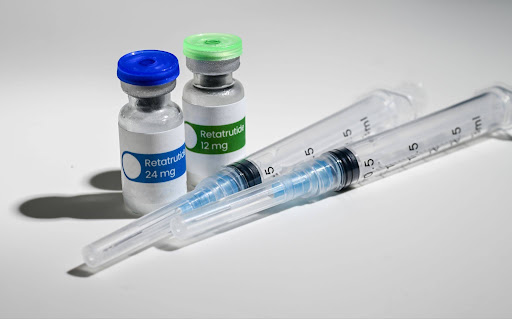
If you are searching for the best medication to treat obesity or lose weight, chances are you have heard about retatrutide, an investigational weight-loss peptide with early clinical trial data suggesting it may produce even greater outcomes than popular weight-loss drugs like semaglutide and tirzepatide.
While early data is promising and many anticipate that retatrutide may soon be available by prescription through legitimate medical channels, it is still in phase 3 clinical trials and has not been approved by the FDA for prescription use or sale.
At this time, the only way to get retatrutide is through authorized clinical trials. Any products available for purchase from online peptide retailers, telehealth storefronts, or third-party sellers claiming to offer early access to retatrutuide or as a “research peptide” are considered an unregulated gray-market or black-market and should be approached with serious caution.
In this article, the regenerative medicine experts at Relive Health explain what retatrutide is, how researchers believe it may work in the body to support weight loss, why reputable health centers, including Relive Health, are not offering retatrutide at this time, and the quality and safety warnings of purchasing it through black-market sources.
Key Takeaway
Retatrutide is an investigational triple-agonist medication being studied for weight loss and metabolic health, with early clinical trial data showing promising results.
It is not currently FDA-approved and remains in Phase 3 clinical trials, with ongoing research expected to continue through 2026. Any retatrutide being sold and labeled as a “research peptide” is unregulated.
Clinically responsible medical providers will not prescribe retatrutide until it has completed clinical trials, received FDA approval, and established legal prescribing and pharmacy dispensing pathways.
If you are seeking medical weight loss, there are legal and safe alternatives to retatrutide, including semaglutide, tirzepatide, and other provider-directed therapies that support metabolic health, body composition, and/or hormone balance.
What Is Retatrutide?
Retatrutide, sometimes called “reta”, is an investigational injectable peptide medication currently being studied for obesity and metabolic disease. Early clinical research suggests retatrutide may support chronic weight management and metabolic health, but it is not yet FDA-approved or legally available by prescription.
Retatrutide works differently from currently available weight-loss peptides, such as semaglutide and tirzepatide, because it is a triple-receptor agonist, meaning it targets three hormone receptors involved in appetite regulation, blood sugar control, and energy balance:
- GLP-1 (glucagon-like peptide-1): A naturally occurring gut hormone that helps regulate appetite, slows stomach emptying, and increases feelings of fullness.
- GIP (glucose-dependent insulinotropic polypeptide): A naturally occurring incretin hormone that helps stimulate insulin release after eating and supports blood sugar regulation.
- Glucagon: A hormone produced by the pancreas that helps regulate blood sugar and may increase energy expenditure and fat metabolism.
This three-pathway mechanism is one reason retatrutide has gained significant attention in obesity medicine and clinical research, and why many are already referring to it as “the next generation of weight-loss medications.”
Clinical trials for retatrutide began several years ago, with Phase 2 data generating significant interest due to the amount of weight loss observed in study participants. While the results so far appear promising, retatrutide is still in Phase 3 clinical trials, and its full long-term safety profile and FDA approval status are still pending.
Because it is not currently approved or legally available outside of authorized clinical trials, anyone currently taking retatrutide is likely obtaining it through research peptide sellers, gray-market online sources, or black-market channels rather than a legitimate pharmacy or medically supervised provider.
Is Retatrutide a GLP-1?
Retatrutide does act on the GLP-1 receptor, but it is not a GLP-1-only medication like semaglutide. It also activates the GIP and glucagon receptors, which may help support additional effects on metabolism and energy expenditure. That is why it is more accurately described as a triple agonist rather than simply a GLP-1.
How Does Retatrutide Work for Weight Loss?
Retatrutide is believed to support weight loss through multiple pathways. The GLP-1 and GIP components may help regulate appetite, improve fullness after meals, and support blood sugar response. The glucagon receptor component may also support energy expenditure and fat metabolism.
This triple-hormone mechanism is one of the key differences between retatrutide and other medical weight loss peptides currently available, such as semaglutide (a GLP-1 receptor agonist) and tirzepatide (a dual GLP-1 and GIP receptor agonist), and is one reason it has attracted so much attention in clinical obesity research.
Retatrutide is currently being studied for its ability to help:
- Reduce hunger
- Increase satiety
- Improve metabolic signaling
- Support fat loss through multiple hormonal pathways
In a Phase 2 obesity trial published in The New England Journal of Medicine, retatrutide produced substantial weight loss over 48 weeks, with the highest-dose group showing mean weight loss of 24.2%.
To date, Phase 3 clinical trial data have also shown significant weight-loss outcomes, including up to 28.7% average body weight loss at 68 weeks in one obesity trial and 16.8% average weight loss at 40 weeks in adults with type 2 diabetes, with additional Phase 3 readouts still expected throughout 2026.
Is Retatrutide Safe?
Legitimate investigational retatrutide currently being studied in clinical trials has demonstrated a generally manageable short-term safety profile so far. However, its long-term safety has not yet been fully established, as it is still in Phase 3 clinical trials.
Based on published trial data to date, serious side effects were relatively uncommon in controlled clinical trial settings. The most commonly reported issues appear to be similar to the gastrointestinal side effects seen with semaglutide and tirzepatide, including nausea, vomiting, constipation, and diarrhea. Dose-related increases in resting heart rate have also been reported in clinical studies.
So far, these side effects are generally described as mild to moderate in severity and are often more noticeable during the dose-escalation period or when first starting the medication.
Some clinical experts and recent Phase 3 reporting have also noted that weight loss in some participants has been substantial enough to raise questions about how much weight loss may be too much, particularly when these medications are used outside tightly controlled medical settings and without provider supervision.
Because retatrutide is still investigational, important unanswered questions remain about long-term cardiovascular effects, durability of weight loss, ongoing tolerability, and safety across broader patient populations, which is one reason reputable clinics, including Relive Health centers nationwide, are not offering retatrutide at this time.
It is also important to note that the retatrutide products currently being sold online as a “research chemical” or “research peptide” are not the same as the investigational retatrutide being studied in legitimate clinical trials. These products are not considered safe for consumer use, as their purity, sterility, dosing accuracy, storage conditions, and ingredient authenticity cannot be verified.
How Do You Get Retatrutide?
As of early 2026, the only legitimate way to obtain retatrutide is by participating in legitimate Eli Lilly-sponsored clinical trials.
Some people get products that claim to be retatrutide from unregulated, grey-market peptide suppliers, often promoted by social media influencers. Sellers sometimes position these products as “not for human consumption” and market them as:
- Research peptides
- Research-use-only vials
- Peptide powders or reconstituted injections
- Prescription-only compounded-style retatrutide products
However, none of these descriptions mean the product is safe or appropriate for human use. It is important to treat any retatrutide available outside of a legitimate clinical trial with serious caution.
The Safety Risks of Buying Unregulated Retatrutide
The retatrutide currently being sold is not the same as what’s being used in legitimate clinical trials. These unregulated products exist in a gray-market or black-market space, which means there is a complete lack of quality control and no reliable way to verify the authenticity, purity, sterility, storage conditions, or dosing accuracy of ingredients.
Regulatory agencies like the FDA have specifically cautioned consumers against purchasing retatrutide outside of legitimate clinical trials, warning that these products may pose significant safety risks, including:
- Receiving a counterfeit product that contains a different active ingredient or no active medication at all.
- Contamination with bacteria, fungi, or other harmful microorganisms.
- Potential exposure to unknown side effects or safety risks that have not yet been fully studied.
- Risk of inaccurate dosing or concentration levels.
- Potentially using injection devices, syringes, or pens that may be defective or improperly handled.
You may also see medical clinics and online telehealth-style sellers “prescribing” retatrutide through compounding pharmacies. These products should also be approached with caution. Offering an investigational medication like retatrutide outside of approved regulatory pathways is not the same as dispensing an approved medication like semaglutide and tirzepatice.
Retatrutide is still an investigational peptide that has not yet completed the full FDA review process to establish its long-term safety and effectiveness profile. Until clinical trials are completed, FDA review is finalized, and legal prescribing pathways are established, there is no legitimate retail supply of retatrutide available to consumers.
For this reason, reputable medical providers, including Relive Health centers nationwide, do not offer retatrutide at this time. Once clinical trials are completed and if FDA approval is granted, it may become available through legitimate medical and pharmacy channels.
When Will Retatrutide Be FDA Approved and Available?
There is currently no confirmed FDA approval date for retatrutide. Phase 3 clinical trials are ongoing, with additional data expected throughout 2026. Reports indicate that regulatory submission is expected to follow completion of these trials.
Assuming the remaining Phase 3 data continues to support both safety and efficacy, and the FDA review process moves forward without delays, industry projections currently point to a possible late 2026 to 2027 timeline.
That said, FDA approval is never guaranteed and depends entirely on final clinical trial outcomes, regulatory review, manufacturing readiness, and whether the FDA determines that the benefits outweigh the risks for public use.
What is the Best Retatrutide Alternative Available for Weight Loss?
The two most popular and effective weight-loss peptides currently available through medically supervised treatment are semaglutide and tirzepatide. Both are established medical weight-loss therapies that act through incretin pathways to help regulate appetite, improve satiety, and support blood sugar response.
- Semaglutide: A GLP-1 receptor agonist that helps reduce appetite, slow gastric emptying, and increase fullness after meals, which can support sustainable weight loss when combined with provider-guided care.
- Tirzepatide: A dual GLP-1 and GIP receptor agonist that works across two metabolic pathways to help regulate hunger, insulin response, and weight loss outcomes.
Depending on lab results, hormone markers, and the complete clinical picture, your provider may recommend other peptides that support metabolic health, body composition, recovery, or hormone optimization through hormone replacement therapy (HRT).
At Relive Health centers nationwide, we do not currently prescribe retatrutide due to its investigational status, lack of FDA approval, and the absence of legal prescribing and pharmacy dispensing pathways. Instead, weight-loss treatment plans are customized to the individual and built around what is medically appropriate, evidence-based, and currently legally available.
Final Thoughts on the Safety and Availability of Retatrutide for Weight Loss
It is understandable why so many people are searching for where to get retatrutide. It is one of the most promising investigational peptide medications under study, with clinical data suggesting it may produce even greater weight loss and blood sugar outcomes than currently available GLP-1-based therapies by acting on three distinct hormone receptors.
However, at this time, the only legitimate way to access retatrutide is through participation in an authorized clinical trial. Retatrutide is not available through a standard prescription and is not something patients should purchase through the black market, a social media influencer, or a clinic claiming safety through a compounding pharmacy.
If you are interested in medical weight-loss support, the safest path is to work with a licensed medical provider who can order and review labs, and discuss your health history and goals to determine which evidence-based, legally available weight-loss treatment is the best fit.
At Relive Health, patient safety and evidence-based care come first. That is why retatrutide is not currently offered through our medical weight-loss programs. Instead, we offer other evidence-based alternatives that align with your health and wellness goals, such as semaglutide, tirzepatide, other peptide therapies that support metabolic health, or hormone replacement therapy (HRT).
We are committed to keeping the public informed and will continue to follow the latest clinical trial data, FDA guidance, and regulatory updates surrounding retatrutide and other emerging metabolic therapies.
In the meantime, if you have further questions about retatrutide, medical weight loss, or whether one of our currently available therapies may be right for you, use our clinic locator to find a Relive Health center near you to schedule a consultation with a provider.
We’d love to help you build a personalized, medically supervised weight loss plan that supports safe, sustainable results.