



Frequently Asked Questions
To get the most accurate and reliable results from your InBody scan, a little preparation goes a long way. These simple steps help ensure your measurements reflect your true baseline, not short-term fluctuations caused by food, exercise, or hydration.
The day before your scan:
Hydrate well. Staying well-hydrated improves the accuracy of the test, especially for water distribution measurements.
On the day of your scan:
Avoid heavy exercise. Skip any workouts for 6–12 hours before your appointment, as exercise can alter hydration levels and muscle volume.
Refrain from eating 3–4 hours before. A full stomach can skew body mass and water readings, so it’s best to fast lightly beforehand.
Skip the caffeine. Caffeine can act as a diuretic and temporarily shift your body’s water balance.
Avoid alcohol for 24 hours. Alcohol can significantly impact hydration and water retention, which may distort your results.
Whenever possible, try to schedule your scan first thing in the morning before eating or drinking anything for the most consistent and clear data.
Ideally, you should avoid drinking water for about 3-4 hours prior to your scan. This is especially important if you’re aiming for a consistent comparison between multiple scans over time. However, if you’re feeling dehydrated, a small amount of water is okay, just try to keep it minimal.
For best results, treat the scan like a fasting lab test: light, rested, and hydrated from the day before, not just minutes before.
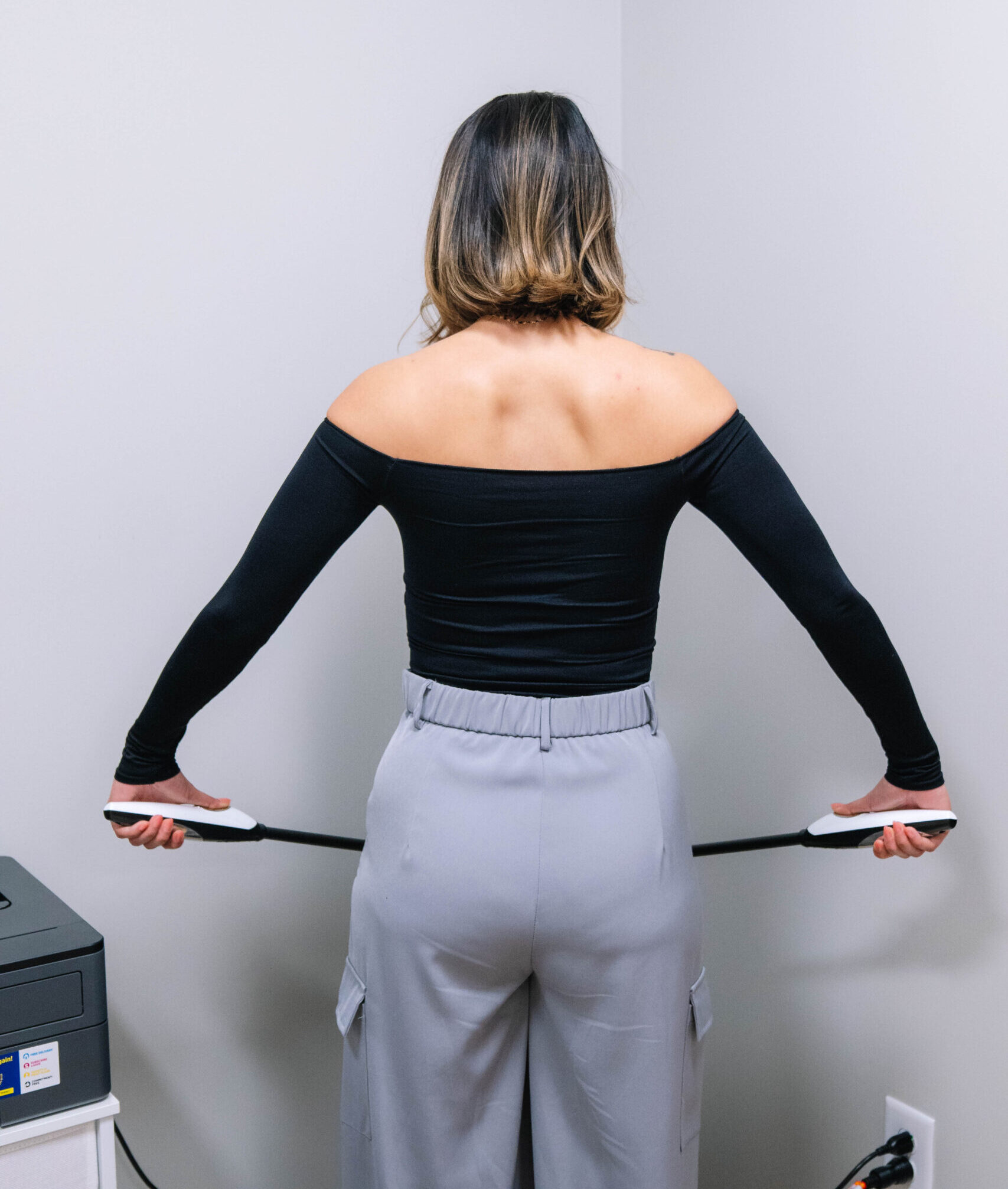
Because InBody scans rely on direct contact between your skin and the device’s electrodes, what you wear can affect the test. Here’s how to come prepared:
Wear light, comfortable clothing. Avoid bulky or layered outfits.
Remove shoes and socks. You’ll need bare feet to stand on the device’s foot electrodes.
Leave jewelry and watches behind. Metal can interfere with readings, so be ready to remove all accessories.
Skip pantyhose or compression garments. These act as a barrier between your skin and the device.
If you’re coming straight from work or the gym, feel free to bring a change of clothes for a quicker transition.
While InBody is safe for most people, there are some exceptions due to the use of bioelectrical impedance technology, which sends a very low-level current through the body.
Do not take an InBody scan if you have:
A pacemaker or implanted defibrillator
Any electronic or life-sustaining medical implant
These devices may be sensitive to electrical currents, even small ones, and scanning could interfere with their function.
If you’re pregnant or have other health concerns, it’s always a good idea to speak with your provider before scheduling your scan.